
Welcome to our 2026 Anti-Trends Report!
We’re a few weeks into the new year, and there are already lots of predictions out there confidently telling you what will happen in Learning & Development in 2026.
Some of them sound pretty convincing. A few will accidentally be right, but most will age poorly. That’s not a knock on the people writing them! It’s just how this stuff works!
The truth is, the biggest things reshaping our industry are rarely the things anyone can predict.
No trend report prepared us for COVID. Unless we missed that? You should’ve told us.
How about AI? No trend report predicted how fast or how hard AI would hit. And anyone claiming they knew exactly how it would all play out is either lying or The Long Island Medium. Those are literally the only two possibilities.
Every year, without fail, something shows up that blows a hole in our carefully laid plans.
Sometimes it’s a sudden reorg or budget freeze. Maybe it’s a legal or compliance change that lands with zero notice and an impossible deadline. It could be a tool, a policy, or a business priority that flips overnight!
So instead of trying to guess what’s coming next, we want to focus on the stuff that always happens.
And might we humbly ask…what even is a “trend” anyway?
Trends aren’t prophecies. They’re the patterns we notice after a lot of people have already reacted to the same unexpected thing at roughly the same time, then given that reaction a tidy name so it feels manageable.
And reacting well turns out to be a very different skill from predicting well.
Just look at Beanie Babies.
They came out of nowhere, triggered a buying frenzy, and inspired all kinds of wild predictions about the long-term viability of the Beanie Baby market. Which is why some of us now consider a very moth-eaten “Twigs the Giraffe” as part of our retirement strategy.
The point is, L&D can fall into the same trap.
But instead of stuffed animals, it’s shiny new AI tools, micro-micro-micro-learning, or whatever idea is getting the most attention at the moment.
We hear that something is “the future of learning,” and suddenly everyone wants it, even if there’s no real understanding of what problem it’s meant to solve or how long it’s likely to matter.
A better bet is to slow down just enough to stay grounded and build a team that can flex when new ideas hit. Think less prediction, more “L&D Gumby.” Bend, stretch, adapt, look adorable, repeat.
Anyway, that’s why we wrote The Anti-Trends Report.
Plus, we really need IDLance to thrive so we can get out of the Beanie Baby hole we’ve been stuck in since 1994.

This or That
This is the stuff that could go either way. Or, more realistically, both ways.
People Will Get Hired or People Will Get Laid Off
Look no further than the U.S. labor market in 2025 for confirmation on this one.
According to delayed federal data released late last year, the U.S. lost roughly 105,000 jobs in October and added 64,000 in November. Take a small step back, and the picture gets blurrier: previous job growth estimates for late summer 2025 were revised downward, unemployment climbed to 4.6% (a four-year high), and private-sector employers shed tens of thousands of roles even as headlines announced “recovery.”
In other words, jobs were sort of disappearing and reappearing at the same time, sometimes within weeks, and sometimes within the same company.
To make things even more exciting, the data itself is uncertain. The Bureau of Labor Statistics has warned that recent numbers may be overstated due to staffing shortages and disrupted data collection during the federal shutdown. A real thrill ride for anyone trying to plan!
So when leaders say things like:
“We’re cautiously optimistic.”
“We’re tightening for now.”
“We’re still hiring for critical roles.”
They’re not being evasive. They’re reacting to an environment where no one fully trusts the dashboard.
For L&D teams, this may show up as:
You’re onboarding new hires in November who are asking if the company is doing okay.
You’re asked to support laid-off employees with dignity while simultaneously accelerating training for the teams deemed “strategic.”
You’re building leadership programs for managers who don’t know if they’ll have teams to lead next year.
Hiring feels like a bet on growth. Layoffs feel like insurance against being wrong. So organizations will often do both, sometimes in the same breath.
The dangerous assumption is believing you’ll know which phase you’re in early enough to plan cleanly around it. You won’t.
That means L&D can’t plan as if headcount is stable or there’s a long, predictable runway. The work has to hold up through churn—people coming and going, priorities shifting, confidence wobbling—without needing to be rebuilt every five minutes.
Optimize for decisions you can undo. Assume some initiatives will need to scale up quickly, and others will need to wind down just as fast. If your learning strategy only works when hiring freezes don’t happen, it’s too fragile.
Budgets Will Grow or Budgets Will Shrink
If 2025 taught us anything about L&D budgets, it’s… okay, we’ve got nothing.
We learned nothing. It was a deeply confusing year.
From a distance, things looked… fine-ish. Overall spending on training did go up. According to the 2025 Training Industry Report, U.S. training expenditures increased by about 4.9%, reaching roughly $102.8 billion between April and July of 2025, with spending on outside products and services jumping even more.
On paper, that looks like momentum. New tools were approved, upskilling initiatives moved forward, and there were real investments being made. Hooray!
But when you look a little closer, that story falls apart a bit. Those topline numbers don’t mean budgets grew everywhere or even that they felt bigger where they technically did.
In a shaky U.S. economy, many leaders held onto budgets rather than fully releasing them, even when they weren’t “officially” cutting spending. At the same time, a larger share of training dollars flowed into centralized initiatives and tools positioned as “strategic” or AI-ready, which counted toward overall growth but didn’t always translate into flexible budget L&D teams could actually use.
Add in real uncertainty about what AI could or should replace and what was still worth paying for, and spending slowed further.
Even teams whose budgets stayed flat felt the squeeze as inflation and expanding workloads ate away at purchasing power.
Sound familiar?
Learning often gets positioned as a priority, but only certain kinds of learning. You were invited to think big, then immediately asked to justify every dollar. Innovation was welcome, as long as it didn’t make anyone nervous. Crank out thirty beautiful Rise courses, complete with custom AI elements on a budget that’s more modest than a Beanie Baby dowry! You can do it, rockstar!
That’s why the budget conversations feel so unsettled heading into 2026. Leaders are trying to invest and protect at the same time, and L&D awkwardly sits right in the middle of that push and pull.
What 2025 made clear is that L&D teams need plans that can stretch and compress without snapping. They need work that can start small, show value quickly, and scale when funding opens up. And work that still holds together when budgets tighten or priorities shift halfway through the year.
Make commitments in stages. Fund the first version fully, see what actually works, and decide on expansion later when you have real data to look at. Expect things to get stuck. AI has completely confused cost expectations, and now many stakeholders aren’t even sure what should cost money anymore.

L&D Will Be “Reborn” or L&D Will “Go Extinct”
Depending on who you ask, L&D is either on the brink of a glorious renaissance or days away from total irrelevance.
We’re finally being invited into strategic conversations! Or we’re about to be replaced by AI and a handful of prompt templates.
If you think about it, it’s kinda flattering how much power people think we hold in either direction. Whether we’re a spectacular success or a spectacular failure…we’re still spectacular! That’s worth something, gosh darn it.
In 2025, the conversation around L&D got extra whiplash-y. Learning was positioned as the key to ushering humanity into its next phase of hyper-capable, endlessly adaptable, fully optimized, enlightened workers. No pressure.
At the same time, we were framed as slow, bloated, outdated, or easily automated away. Rude!
And then there’s AI.
Depending on the day, AI is either:
Completely revolutionizing learning ecosystems forever
Or stealing all of our jobs while we sleep
In reality, 2025 showed us something way less exciting.
AI did start changing how our work gets done, mostly by speeding things up. Content moved faster. Prototyping was easier. Early drafts came together with less friction, which gave teams more room to experiment and rethink how the work flowed.
What didn’t happen was an extinction-level event.
Organizations didn’t suddenly stop needing learning strategy, judgment, or context. People who understand how adults actually learn at work didn’t become obsolete overnight. Tools changed how some work got done, but they didn’t replace the need to decide what actually mattered.
And the “L&D is back, baby” narrative didn’t fully pan out either.
Learning did matter in 2025. Skills and capabilities showed up in real conversations. That still didn’t translate into automatic influence, authority, or unlimited trust. L&D teams continued to justify their work, stay closely aligned to business priorities, and operate within real constraints.
What actually happened, and what’s likely to continue into 2026, is much more nuanced.
Some teams used new tools to free up time and improve how they worked. Others felt more pressure to move faster without clearer direction or added support. In most cases, L&D’s role didn’t disappear or expand — it evolved, unevenly, alongside the business.
By late 2025, it was easy to see where some of the “L&D is doomed” talk came from. The traditional online courseware market was showing real strain, with major platforms Udemy and Coursera consolidating as large content libraries became harder to justify. That doesn’t mean traditional training will disappear. But it’s unlikely to be the main growth engine going forward.
That pressure didn’t mean learning stopped mattering. It meant certain forms of learning were under pressure, while others became more important.
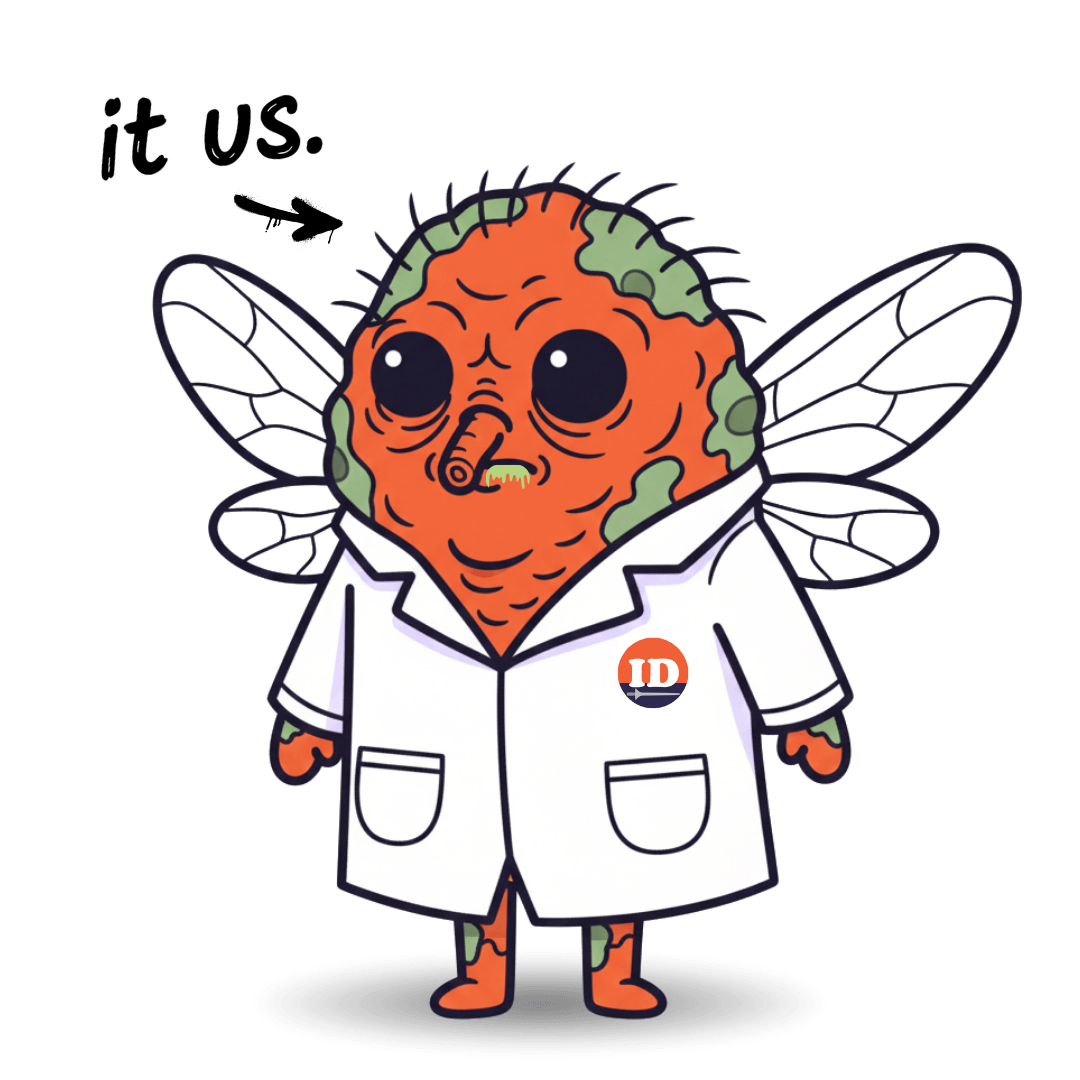
Put crudely, and this is the best analogy we’ve got, L&D spent a lot of 2025 feeling like Jeff Goldblum in The Fly.
Not fully one thing or another. Too much excitement around experimentation, not quite enough guidance to shape it, and very little understanding about what we were supposed to become next.
So we’ve all been learning how to function inside these slightly wacky new bodies in real time. And what’s with all the goo? You guys are oozing goo from your mouths, too, right? Wait….right? Guys?
The future of L&D probably won’t make for a great headline, at least not this year. It will look a lot like what it’s always looked like at its best: evolving alongside the business, not disappearing, and not magically ascending either.
Stop trying to define your final form. Spend your energy making the current version useful and hard to ignore. We don’t care what anyone says; proving ROI is tough. When you can, anchor learning to visible outcomes and don’t overpromise what you can’t actually prove.

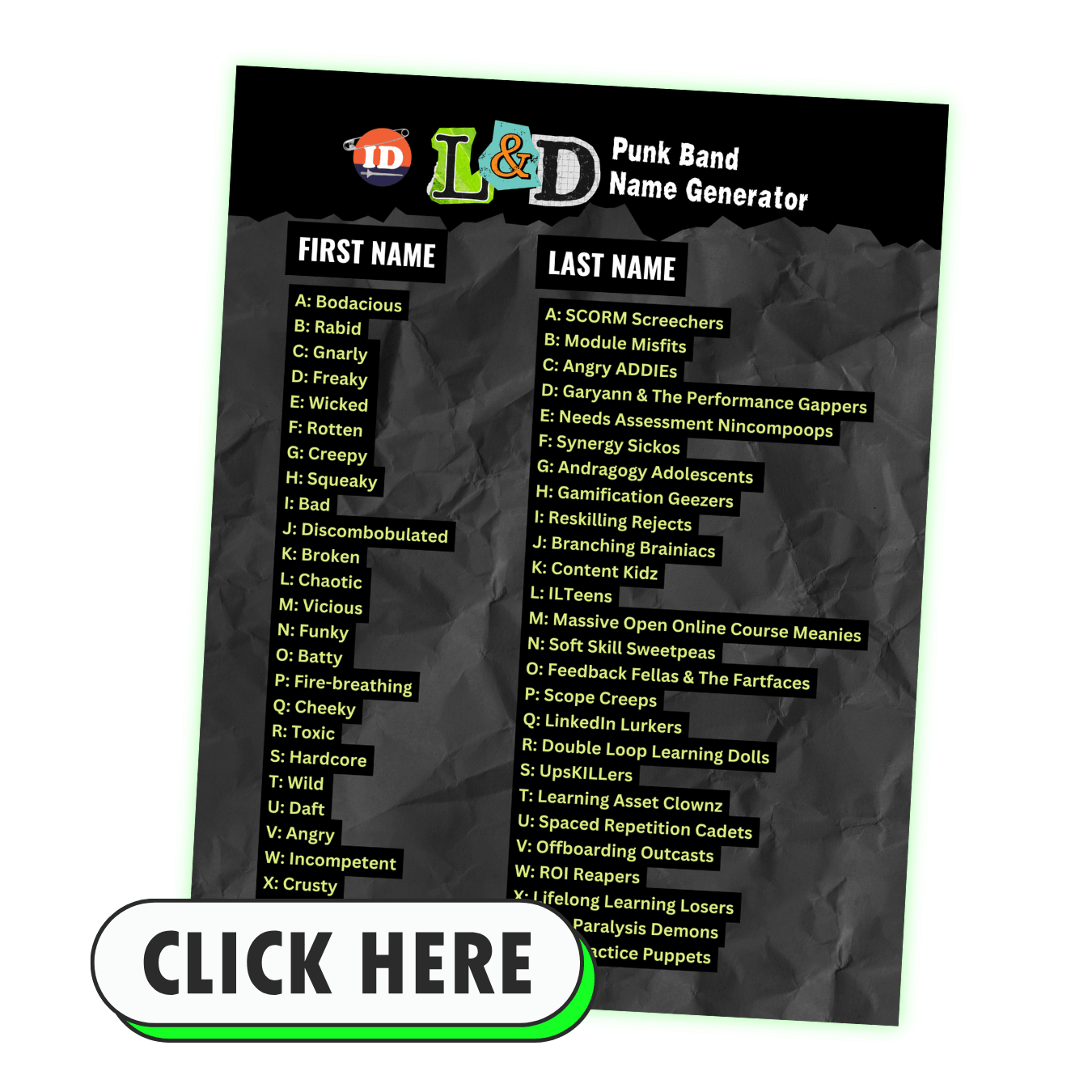
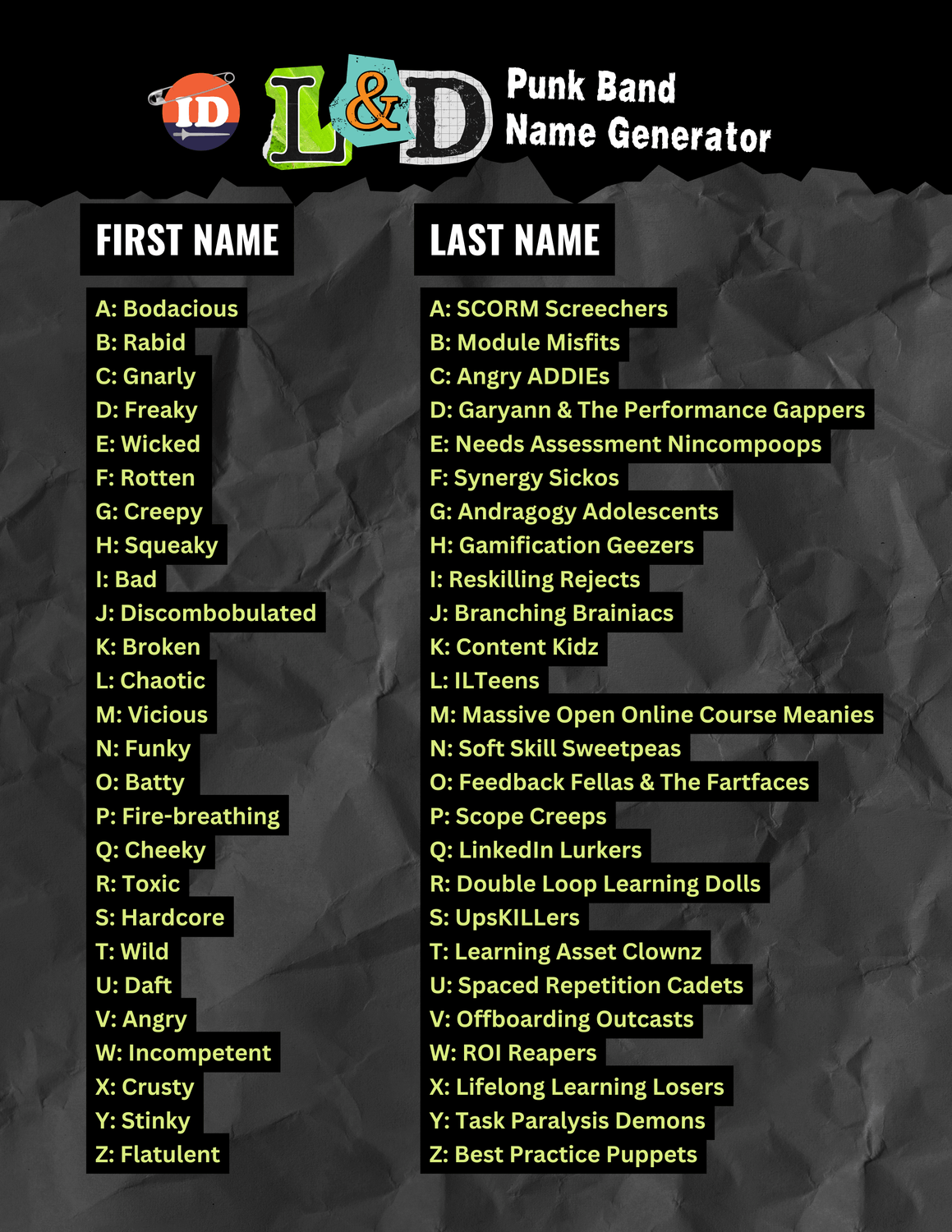
Man, "using your brain" is just another tool of the Productivity Industrial Complex. Pause your reading for a second and find your L&D punk band name.
Share your band name here if you get a really funny one. We mean...cool...one.
The Great Unknown
If it feels like something could sideswipe you at any moment, it’s because it can!
Don’t panic, but we’re all a little exposed right now, like baby bunnies in a field, scanning the horizon and hoping whatever shows up next isn’t too toothy.
The thing about the next disruption is that it won’t look like the last one. Even when we can see something forming, we almost always misjudge how it actually lands.
We’ve been here before.
AI was “coming” for years. Everyone knew it mattered. What almost no one predicted was the speed, the emotional reaction, the policy panic, or the sudden spike in workload as organizations scrambled to respond. Or the debates about em dashes. Let’s not forget those.
The technology itself wasn’t the hardest part. The human, organizational, and procedural fallout was. Same story with COVID. Same with sudden regulatory changes. Same with legal mandates that show up fully formed and due yesterday.
Which brings us to aliens.
The Alien Invasion Test
Imagine you wake up tomorrow morning to the news that aliens have arrived. No slow drip of sightings or speculation. We're talking close encounters of the third kind, baby! Aliens are here.
What part of your ecosystem breaks first? (Besides your brain.)
Is it your content, built on the assumption that humans are still in charge?
Is it capacity, as the same small team is suddenly expected to support the entire organization through a full-blown crisis?
Or is it decision-making, because no one is quite sure who’s allowed to approve anything when the approver may or may not be trapped aboard the mothership?
Ok, we probably won’t have an alien invasion in 2026. Probably.
But the scenario is absurd enough to strip away false certainty. When something truly unexpected happens, the problem is rarely a lack of information. It’s friction, bottlenecks, and overloaded people. Systems are built for “normal” conditions and don’t love surprises.
What the Alien Invasion Test actually asks is pretty simple:
Where does your learning system rely on things staying calm, predictable, and fully staffed?
L&D teams that hold up under disruption don’t do it by guessing right. They do it by building work that can bend (L&D Gumby!) Their plans can pause, shrink, or scale without starting over. They build clear enough decision paths that people don’t freeze while waiting for permission, and there’s enough slack in the system that urgency doesn’t immediately turn into burnout.
You don’t need to know what the next disruption will be. You need to know what would snap first if one showed up tomorrow.
Because the hardest part of disruption is rarely the disruption itself. It’s suddenly seeing all these assumptions your system was built on, and which ones can’t survive impact.
When things feel uncertain, don’t look for better forecasts. Look for faster decisions and clearer ownership. Start identifying where work slows, stalls, or breaks under pressure now.
Get a head start by downloading and using this Alien Invasion Audit we made for ya!

Dude...looking at screens all day is a trap set for us by Big Rectangle. It's like, some of us think in circles, man. Ovals, dude!
Click the image over there to check out what onboarding designed by aliens might look like. It's still a screen...but smaller. RESIST!
The Usual Suspects
Let’s hear it for our favorite recurring characters!
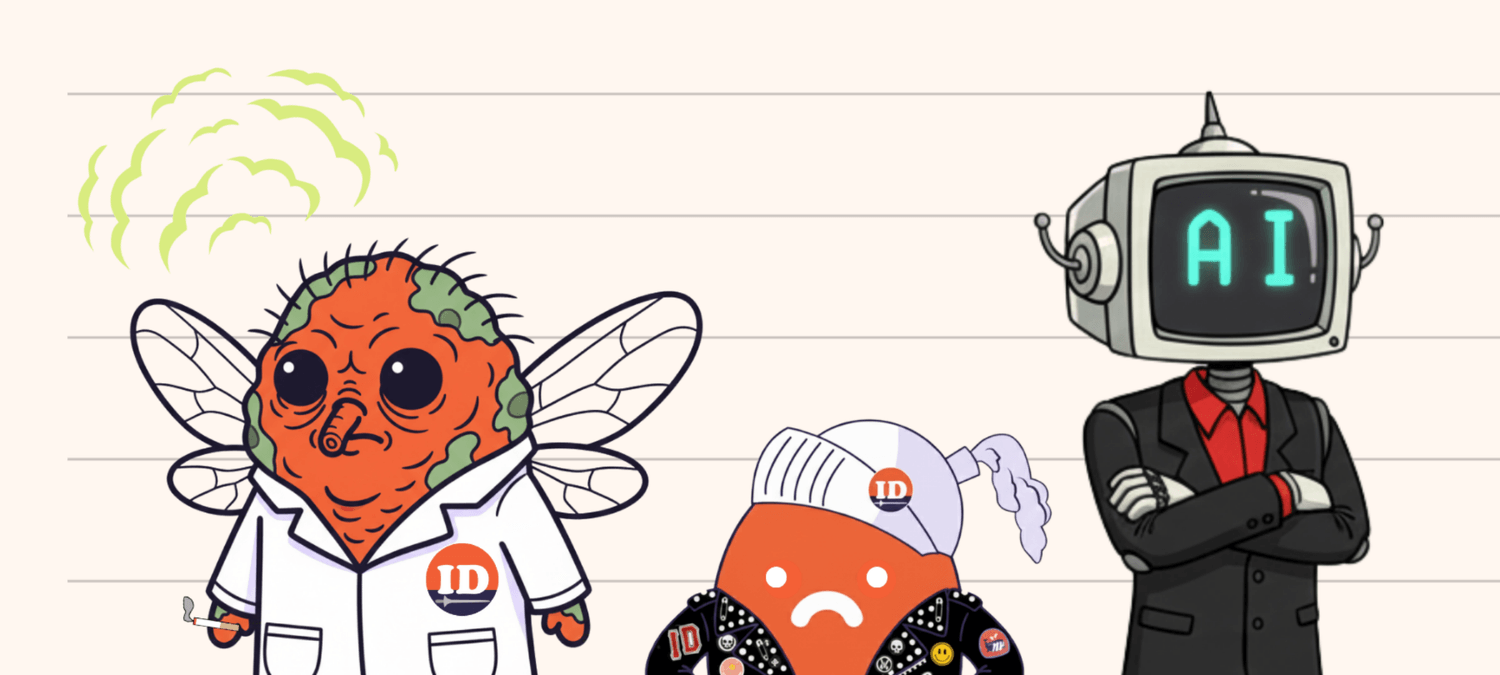
Often called trends, but usually just sh*t hitting the fan from a slightly new angle!
We know these things are coming. We just don’t know what shape they’ll take this time. Like Pennywise the Clown, they always look a little different, but are the same basic problem underneath.

AI will keep shifting under our feet
Think back to how you were using AI in January 2025, then fast-forward to December. The tools probably changed. Your comfort level definitely did. And the expectations around what AI should be doing probably changed fastest of all.
L&D won’t ever be “done” adapting to AI, and trying to predict where it lands next usually creates more stress than clarity. The steadier move is learning how to stay upright while the ground keeps shifting.

Tools will show up that don’t really belong anywhere
More tools will land in the blurry space between learning, productivity, and operations. They’ll be useful, but awkward, hard to govern, and even harder to integrate. Some of them will enable kinds of work we don’t fully have names for yet, because we haven’t quite wrapped our heads around what they make possible. Everyone will want them, but no one will be quite sure who owns them!
The problem won’t be adoption. It’ll be deciding where these tools actually live, who supports them, and how much mess the organization is willing to tolerate in exchange for speed.

New skills will be required before anyone names them
New tools create new skill requirements long before job titles catch up. People will be asked to apply judgment alongside automation and stitch workflows across systems that were never designed to talk to each other. L&D will often find itself supporting capabilities the organization hasn’t fully acknowledged it now depends on. The work will be real and important, but the labels will lag.

Business priorities will keep moving faster than plans
Revenue pressure, legal and compliance needs, and risk mitigation will continue to reshuffle priorities, often with very little warning. Learning will be asked to support wildly different goals in quick succession, usually without the luxury of resetting timelines or scope.
Planning cycles will keep trailing reality, but this isn’t a failure of planning. It’s just the environment!

And then there’s the pace...
At least once this year, a single disruption will set off a chain reaction. What starts as one change will ripple into multiple learning needs all at once. Work scheduled for “later” will suddenly become urgent. Timelines will compress and priorities will reshuffle overnight.
The work itself may not be new, but the speed definitely will be.
Most “new” problems are old problems in fancy new outfits. Figure out which one you’re dealing with before you treat it like an emergency or a transformation! Not everything needs a response that's turned up to eleven.


Dude…it’s just endless scrolling now. Scroll down. Scroll up. Scroll until your thumb gives up.
They’re weakening our fingers, man. Really makes you wonder what they're up to.
Click the image to do some coloring instead! Show 'em who's in charge of those fingers!
How to Prepare
You can’t predict the next disruption, but you can prepare to move quickly when it hits. Preparation, in practice, comes down to three things.
PEOPLE
No matter what our robot overlords say, people still do the work. Not just headcount, but actual humans with different backgrounds, instincts, and ways of seeing a problem.
When things get weird, learning doesn’t survive on individual heroes. It holds up because there’s range! That means people from different generations, with different career paths, including those who learned this work before AI showed up and those who learned alongside it.
Teams that struggle during disruption often aren’t short on talent so much as stuck in a narrow perspective. When the same small group is asked to design, build, review, and decide everything, blind spots pile up fast.
Learning experiences can start to feel thin, overly technical, or completely disconnected from what they were supposed to accomplish in the first place. The teams that weather change better tend to have access to more viewpoints. That means people who can sense when something won’t land, when a message needs softening, or when a “technically correct” solution is still going to fail in practice. Which, unfortunately, happens a lot more than anyone wants to admit.
There’s also a real advantage in community. Not just knowing how to do the work, but knowing who to call when the work shifts suddenly. Prepared teams have a wider circle they can pull from, people who already understand the context and can step in without months of ramp-up or a 47-page onboarding doc no one has time to read.
SKILLS
The skills L&D teams need going into 2026 aren’t especially mysterious, but they’re wider than they used to be. The work asks for more range, better judgment, and more comfort operating without a fully defined playbook.
There is one skill we do want to call out, though: assessing the content that you feed into AI. We’re not talking about being the subject matter expert on everything. We’re talking about spotting gaps, questioning assumptions, and recognizing when something sounds true but isn’t actually right. If we’re going to hand over more of the work to machines, we really need to make sure the content and context we give them is solid.
Beyond that, there’s the ability to adapt quickly when priorities shift midstream, and to keep moving even when the situation isn’t fully defined. There’s data literacy, not in the sense of becoming analysts, but knowing how much confidence to place in what the numbers are telling you. There’s enough technical literacy to ask smart questions about new tools without assuming every new feature needs to be adopted immediately.
Communication still does a surprising amount of heavy lifting. Many teams are getting very good at writing prompts for machines while still struggling to ask clear questions of each other! That gap shows up most clearly in problem-solving. When something breaks, fixing it usually depends on being able to talk through what’s actually happening, challenge assumptions, and work toward a solution together.
There’s also a big irony bubbling beneath the surface. Relying on AI for answers can reduce our capacity for critical thinking. Which is… not great. That makes protecting critical thinking as a real, visible skill on the team more important than ever.
Of course, not all of these skills need to live on your team forever. Some are worth building and strengthening over time. Others are very specific and only matter for a short stretch — deep familiarity with a tool, a platform, a data set, or a particular type of work.
The teams that do best aren’t trying to do everything themselves. They know when to keep something close and when to bring in help for a bit, then let it go.
TECHNOLOGIES
Technologies aren’t going to arrive politely, one at a time.
Brand-new tools, major upgrades, version 2.0s of things you just finished learning are going to jump scare you from every direction.
You don’t need to know how to wield it all, but you do need to stay informed enough to make a move when and if it comes to that. It’s kind of like updating your iPhone’s operating system. Skip enough updates, and eventually the jump forward is just too big to make. You’re stuck making calls on your iPod Touch.
You need people who can experiment early, understand the tradeoffs, and tell you not just how something works, but whether it’s worth touching at all. That kind of judgment usually isn’t a full-time role. It’s short-term, highly specific expertise that becomes valuable right when a new technology makes that transition from cool novelty to actually relevant.
This matters even more now, as expectations around learning continue to change. As we’ve already seen, it’s not that learning disappears when technology accelerates; it’s that certain delivery models come under pressure while others become more useful.
Technology decisions aren’t just about tools anymore. They end up redesigning learning, whether we mean to or not.
This is the End
Welp, we've reached the end of the 2026 Anti-Trends Report. We'll miss you.
If you’re feeling a little uneasy about the future of L&D after reading this, that’s understandable.
This is a strange moment to work in learning. The tools are changing fast, and expectations seem to be different on a day-to-day basis. It’s a lot of responsibility, especially when you’re also trying to support other people through change.
The truth is, no one has this fully figured out yet. Not even the loudest voices on LinkedIn. We’re all learning together and trying to do right by the people and organizations we support.
The good news is L&D has always been good at navigating ambiguity. We’re used to making sense of incomplete information, adjusting as things change, and building while the rules are still being written. That part of the job hasn’t gone away, even if the world around it looks different now.
You don’t need to have a perfect strategy for 2026. You just need to build in enough flexibility to respond thoughtfully and not lose the human side of the work along the way.
Stay curious. Stay human.
Stay a little punk.
Give Us a Shout!
We support L&D teams with strategy, instructional design, and learning development, whether they need planning help, hands-on build support, or extra capacity! We’re especially good at jumping in when things are moving fast or resources are stretched thin.
If you liked reading this anti-trends report and are curious how we can support your team or make life a little less stressful this year, give us a shout! We'd love to meet ya!

Copyright 2026 | All Rights Reserved
Download an old-timey PDF of the 2026 Anti-Trends Report!
All text, no fun. Still punk!